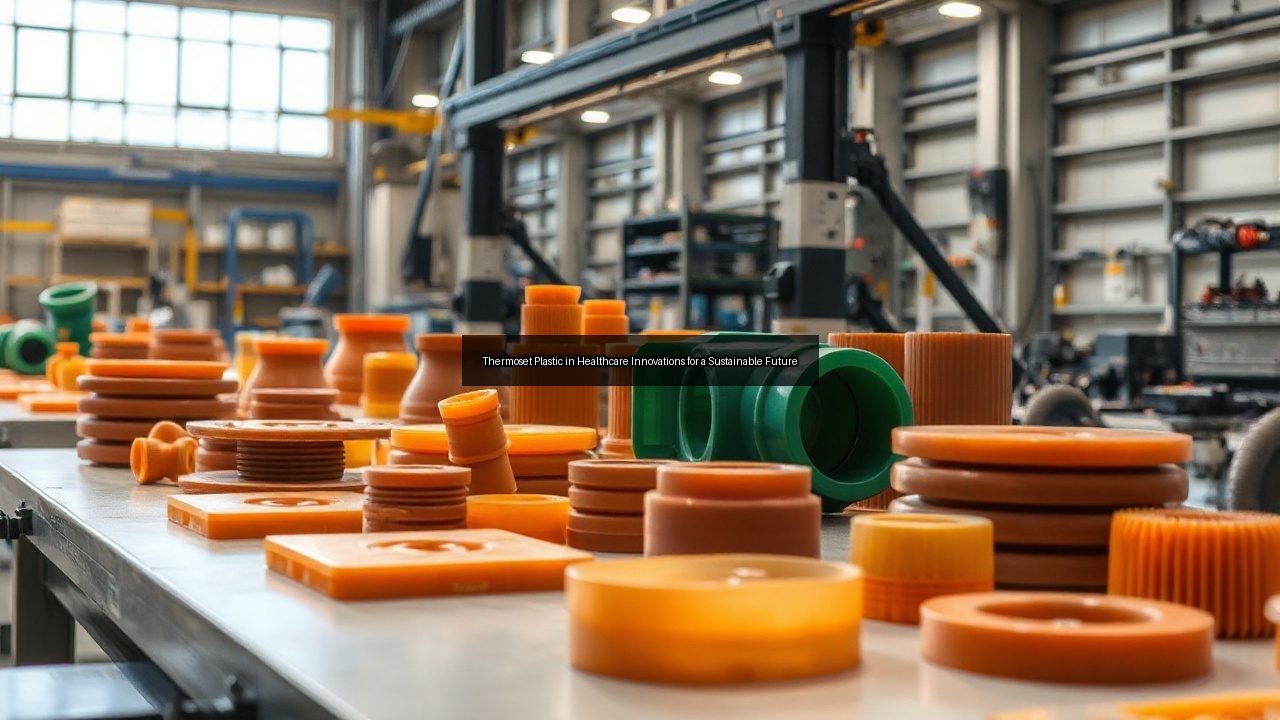
Thermoset Plastic in Healthcare Innovations for a Sustainable Future
The Role of Thermoset Plastics in Healthcare Innovations
Applications of Thermoset Plastics in Medical Devices
Thermoset plastics play a vital role in the healthcare sector, particularly in the development of medical devices. These materials undergo a curing process that transforms them into a rigid, durable form, making them ideal for applications requiring high levels of strength and stability. Common uses include surgical instruments, dental devices, and prosthetics. The unique properties of thermosets, such as excellent dimensional stability and resistance to heat, ensure that these devices perform reliably in demanding environments. For example, thermoset plastics are used in the construction of electrical insulation components that are essential for the safe operation of medical imaging equipment. The versatility of thermosets allows manufacturers to tailor properties for specific applications, enhancing functionality and safety in patient care.
Advantages of Thermoset Over Thermoplastics in Healthcare
Choosing thermoset plastics over thermoplastics presents several advantages in healthcare applications. Thermosets exhibit superior dimensional stability and resistance to deformation at elevated temperatures, making them exceptionally durable for long-term use. Unlike thermoplastics, which can soften and reshape upon heating, thermosets maintain their integrity and shape under stress. This characteristic is crucial in medical environments where equipment must withstand sterilization processes without losing functionality. Additionally, thermoset materials often possess enhanced chemical resistance, which is particularly important for devices that come into contact with various bodily fluids. The strong cross-linking in thermoset polymers results in improved impact resistance, ensuring that devices remain intact in high-pressure situations.
Case Studies: Successful Use of Thermoset Plastics in Healthcare
Several case studies highlight the successful integration of thermoset plastics into healthcare. One notable example is the development of advanced orthopedic implants using polyurethane thermoset plastics. These implants demonstrate excellent biocompatibility and mechanical properties, leading to improved patient outcomes. Another case involves the use of acrylic thermoset materials in dental applications, where their aesthetic qualities and durability make them a preferred choice for long-lasting restorations. Furthermore, manufacturers have adopted thermoset plastics in the production of surgical tools, where enhanced grip and resistance to wear significantly impact performance. Each of these examples underscores the growing reliance on thermoset plastics in creating innovative solutions that meet the high demands of the healthcare industry.
Sustainability and Efficiency in Thermoset Plastic Manufacturing
Eco-Friendly Production Techniques
The production of thermoset plastics is evolving to incorporate more eco-friendly techniques that align with sustainability goals. Innovations in manufacturing processes focus on reducing waste and energy consumption. For instance, manufacturers are increasingly adopting bio-based feedstocks derived from renewable resources plastic thermoset to produce thermoset materials. This shift not only minimizes the carbon footprint associated with thermoset plastic production but also promotes the use of sustainable materials that can replace petroleum-based alternatives. Additionally, advancements in closed-loop manufacturing systems allow for the recycling of thermoset scraps and off-cuts, effectively reducing material wastage. By embracing these greener practices, the thermoset plastic industry contributes to a more sustainable future while maintaining the performance attributes that make these materials essential in healthcare.
Recycling Challenges and Solutions
Recycling thermoset plastics presents unique challenges due to their cross-linked structure, which prevents them from melting and re-forming thermoset plastic composite like thermoplastics. This rigidity complicates traditional recycling methods, leading to a significant amount of thermoset waste. However, innovative approaches are emerging to address these obstacles. Chemical recycling methods, which involve breaking down the thermoset polymer structure into its constituent chemicals, show promise for reintroducing valuable materials into the production cycle. Moreover, researchers are exploring the development of thermoset plastics that are designed for easier recycling, enhancing the overall sustainability of these materials. Collaboration between manufacturers, researchers, and policymakers is essential to create effective recycling programs that minimize environmental impact while maximizing the utility of thermoset plastics in healthcare and beyond.
Comparative Analysis: Thermosets vs. Other Plastics in Sustainability
When comparing thermoset plastics to other types of plastics, such as thermoplastics and polyvinyl chloride (PVC), thermosets often stand out in terms of durability and longevity. Thermosets typically have a longer lifespan, which reduces the frequency of replacement and associated waste. While thermoplastics can be recycled more easily, their tendency to degrade over time under high heat and stress limits their long-term applicability in critical healthcare environments. PVC, while widely used, raises environmental concerns due to its toxic additives and complex recycling processes. In contrast, thermosets offer a combination of performance, durability, and potential for sustainable production methods, making them a more responsible choice as the healthcare industry seeks to minimize its environmental footprint.
Chemical Composition and Performance of Thermoset Plastics
Understanding the Chemical Structure of Thermosets
Thermoset plastics derive their unique properties from their chemical composition and structure. These materials consist of long polymer chains that are chemically cross-linked during the curing process, resulting in a rigid and thermally stable network. Common types of thermoset plastics include epoxy, phenolic, and polyurethane. The cross-linking creates a three-dimensional structure that enhances mechanical strength and resistance to heat and chemicals. This chemical resilience makes thermosets highly suitable for demanding applications in healthcare, where exposure to sterilization processes and harsh environments is common. Understanding the chemical structure of thermosets allows manufacturers to tailor these materials for specific applications, ensuring optimal performance in medical devices and components.
Impact Resistance and Durability in Healthcare Environments
Impact resistance and durability are critical factors in the selection of materials for healthcare applications. Thermoset plastics excel in these areas, providing reliable performance even in high-stress situations. For instance, surgical instruments made from thermoset materials maintain their integrity during repeated use and sterilization cycles. The rigidity of thermosets ensures that devices do not warp or deform, which is crucial for maintaining precision in medical procedures. In addition, the resistance of thermosets to chemical degradation contributes to their longevity, making them an ideal choice for components exposed to bodily fluids or disinfectants. This durability translates to improved patient safety and reduced costs for healthcare facilities, as long-lasting materials decrease the need for frequent replacements.
Thermoset vs. Thermoplastic: Key Differences in Performance
Thermosets and thermoplastics exhibit distinct performance characteristics that influence their suitability for various applications. Thermoplastics can be re-melted and reshaped, making them versatile for manufacturing processes but less stable under extreme conditions. In contrast, thermosets undergo a curing process that permanently hardens them, resulting in materials that are more resistant to heat, chemicals, and mechanical stress. This permanence offers significant advantages in healthcare, where reliability and safety are paramount. For example, thermoset plastics used in electrical insulation components provide superior performance and longevity compared to their thermoplastic counterparts. Understanding these differences helps healthcare professionals and manufacturers make informed choices when selecting materials for specific applications, ensuring optimal performance and patient safety.
Future Trends and Innovations in Thermoset Plastics
Emerging Technologies in Thermoset Fabrication
Innovations in thermoset fabrication are on the rise, driven by the need for advanced materials in healthcare and other industries. Technologies such as additive manufacturing (3D printing) are opening new avenues for creating complex thermoset components that were previously difficult to produce. This approach allows for rapid prototyping and customization, enabling manufacturers to design tailored solutions for specific medical applications. Additionally, advancements in curing techniques, such as ultraviolet (UV) curing, provide faster production times and improved material properties. These emerging technologies enhance the efficiency of thermoset manufacturing, making it more adaptable to the evolving demands of the healthcare industry.
Potential for Thermosets in Aerospace and Automotive Industries
The versatility of thermoset plastics extends beyond healthcare, with significant potential in the aerospace and automotive industries. In aerospace, the lightweight and durable nature of thermosets makes them ideal for constructing components that must withstand extreme conditions while minimizing weight. Similarly, the automotive industry benefits from thermosets in the production of high-performance parts that require strength and heat resistance. As these industries push for more sustainable materials, thermosets offer a promising alternative due to their long lifespan and lower environmental impact compared to traditional materials. The cross-industry adoption of thermoset plastics signals a broader trend toward sustainable practices and innovative solutions.
Global Market Trends in Thermoset Plastic Applications
The global market for thermoset plastics is expanding rapidly, driven by increasing demand across various sectors, including healthcare, aerospace, and automotive. Analysts predict steady growth as industries seek materials that offer enhanced performance, durability, and sustainability. The rise of eco-friendly manufacturing practices and biocompatible materials will further propel the adoption of thermoset plastics. Regions such as Europe and North America lead in innovation and manufacturing capabilities, while emerging markets in Asia are also beginning to adopt these advanced materials. Understanding these market trends enables stakeholders to position themselves effectively in a competitive landscape, capitalizing on the growing opportunities presented by thermoset plastics.